Hariharan Senthilkumar - Week 9: Power Systems in the Wizarding World
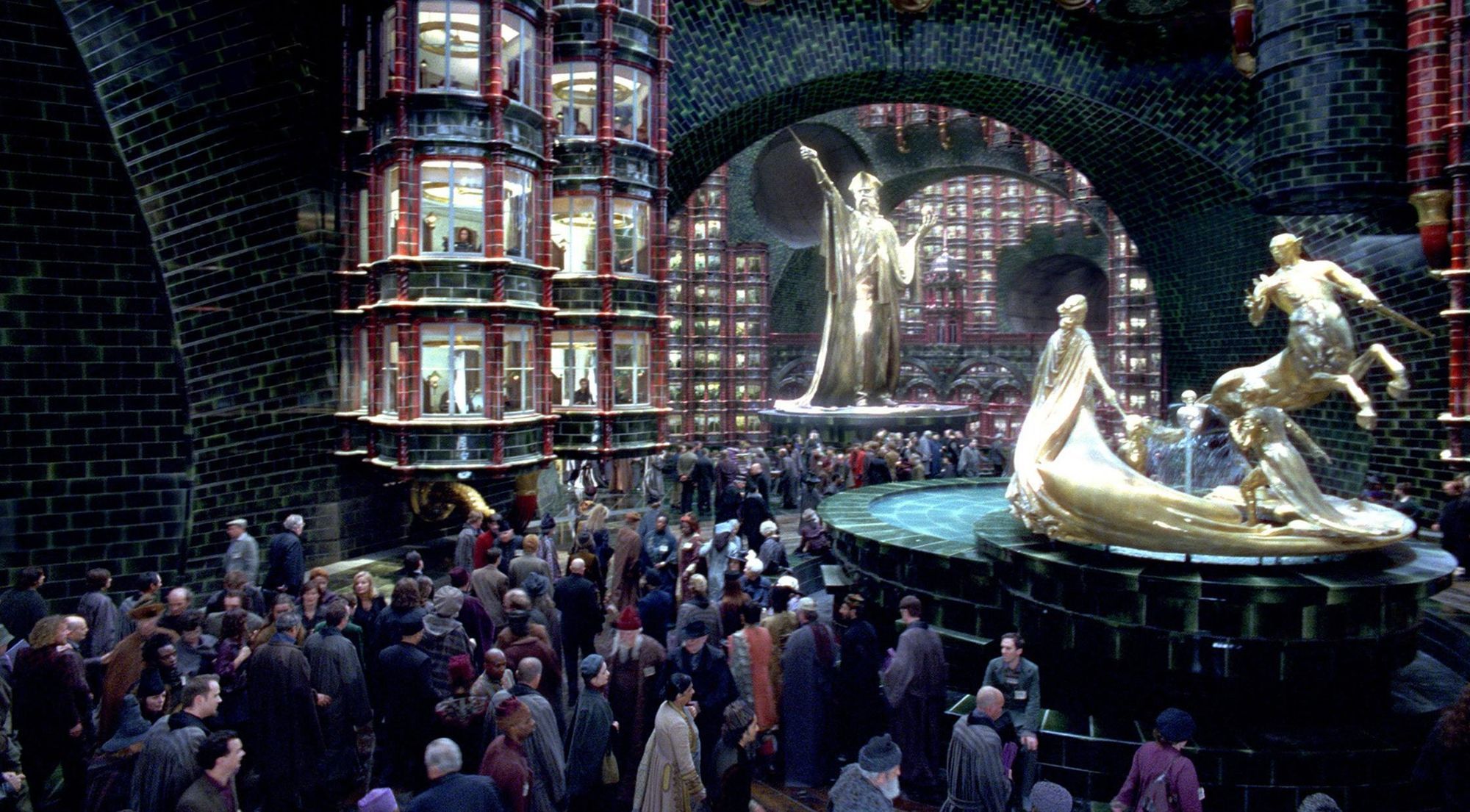
The British Ministry of Magic: https://static1.srcdn.com/wordpress/wp-content/uploads/2019/05/10-Things-About-the-Ministry-of-Magic-F.jpg
In our home, California, we are ruled by various power systems. Our city council, our state government, the federal government, international governing bodies, etc. The Wizarding World is no different; in the books, we often see Harry Potter in direct conflict with or allied with the various power systems of his world. Harry spends a good part of the fifth book, Order of the Phoenix, in direct conflict with many powerful members of wizarding Britain, such as Minister of Magic (basically the president) Cornelius Fudge, Senior Undersecretary to the Minister for Magic Dolores Umbridge, the writer for a famous newspaper Rita Skeeter, and many other powerful people.
The Harry Potter series tackles the issue of corruption within power structures, something that I think is worth analyzing. Take Minister of Magic Cornelius Fudge, for example. For most of the book series, Fudge is an almost fatherly figure to Harry. Harry, being a lonely orphan who had spent years being abused by his aunt, uncle, and cousin, drew sympathy from Fudge. The Minister made sure Harry was under safe supervision in the Prisoner of Azkaban after Harry ran away from his aunt and uncle. The Minister took time to talk to Harry and help him out whenever possible.
However, at the end of Goblet of Fire, the Minister turns on Harry and accuses him of trying to gain more fame and attention by claiming that Voldemort had risen once more. The truth was, Fudge did care about Harry, but only because Harry Potter was a living legend and it was in his best interests to curry favor from the boy. The moment that Harry seemingly threatened Fudge's goals, Fudge immediately shut him down. Not only that, but Fudge made the wizarding press turn against Harry as well, painting Harry as unstable and a liar.
Fudge is also what we would consider a racist. Though Fudge would never admit it, he has a large bias towards pure-bloods. In the Wizarding World, pure-bloods are witches/wizards who hail from an all-magic family, with no Muggles (non-magical people) at all. Half-bloods have both wizarding and Muggle ancestry and Muggle-Borns are witches/wizards who have no magical ancestry at all. The Wizarding World has a long history of persecuting Muggle-Borns, believing them to be inferior witches/wizards. The blood-supremacists of the magical world have a striking resemblance to Nazis in our own world. In fact, Voldemort is also a blood supremacist, but he takes it one step further. He believes that Muggles and Muggle-Borns are not only inferior to pure-bloods but that they should be slaves who serve pure-bloods.
I think analyzing power structures in books, especially in fiction, is so interesting because it is intriguing to know what path the author will take. Will they take a more conventional route and copy systems that exist in the real world? Will they start their own system from scratch? What values will his system have? Questions like this allow us to consider how power works in our world and how it could be better, and it is a wonderful intersection of language and power.


This comment has been removed by the author.
ReplyDeleteHi Hari,
ReplyDeleteFirst of all, I would like to say how I am surprised how even though I have watched the Harry Potter series multiple times, and have read it as well, I never critically think about it, and I have never really thought about the power structures like that. Since the series is indeed fictional, the last thing I would automatically do is compare the wizarding world to our world today. However, after you pointed out the similarities in your blog, I do see the resemblance, and I have come to understand that any world will have similar aspects, including the presence discrimination. Your blog also has made me realize that in all books and in real life, there is a common goal that most characters have, which is to gain more power, such as in Harry Potter, or in the case of our own world, the power that money is able to give us. Overall, I really enjoyed how you combined aspects of a fictional world to our own world, since it really made me think about how seemingly fictional themes are not as separate as we think they are.
Hi Hari! As someone who used to be a Harry Potter fanatic as a kid, your blog was especially thought-provoking to me because it made me consider an entirely different side to the Wizarding World that I had never previously paid attention to. I admired the way you structured your blog; introducing the different ways that we are ruled by power systems in California, then comparing it to the various power systems present in the Wizarding World made your presented argument very thoughtful and engaging. The comparison between Cornelius Fudge’s actions and how they represent modern corruption and biases was especially striking to me, and by explaining Fudge’s initial father-like presence in Harry’s life and his eventual betrayal, you effectively portray how people’s allegiances can shift when their personal or political interests are at risk. One of the points in your blog that I particularly found fascinating was how Voldemort’s hatred toward Muggles and Muggle-borns is starkly similar to the Nazi regime, since it was something that I never stopped to truly think about before. Thank you for sharing your insights!
ReplyDeleteHi Hari! I remember from last year English class that you really liked Harry Potter, so this blog post seems to be right up your alley! I also loved the Harry Potter series a lot as a kid; even now, I enjoy watching the movies and consider the franchise a valuable part of my childhood. I agree that is it worth analyzing power structures in fictional texts, especially as they mirror or parallel real-life situations. Personally, I love to over-analyze books and movies for their relevance to real-life structures; the Hunger Games, for example, mirrors harmful capitalist practices and the exploitation of the working class. Anyways, going back to your blog! I like how you described Fudge's character and led up to his exposition as a corrupt racist, which could relate to real-life politicians and political practices today. He is wrongfully given power, and therefore uses that power in a harmful way. This could reflect on how dictators gain too much power and use it wrongly. Overall, this is a great topic to write about and you inspired me to maybe compare power in fiction to power in real-life in a later blog!
ReplyDeleteHey Hari!
ReplyDeleteIf I'm being honest, when I first read that you were writing about Harry Potter I felt slightly uninterested as I have never been the biggest fan of the series but in reading your blog I immediately felt like a fanatic of it. I not only learned so much but was hooked on to the plot and unique terminology. From this, I pledged to make sure to read at least 1 Harry Potter book by Summer but if I do not find the time then at least watch a few of the movies. I also thought that it was cool how you analyzed the characters and plot structures in the story! Overall, I truly enjoyed reading what you had to say this week and look forward to reading your next blog!